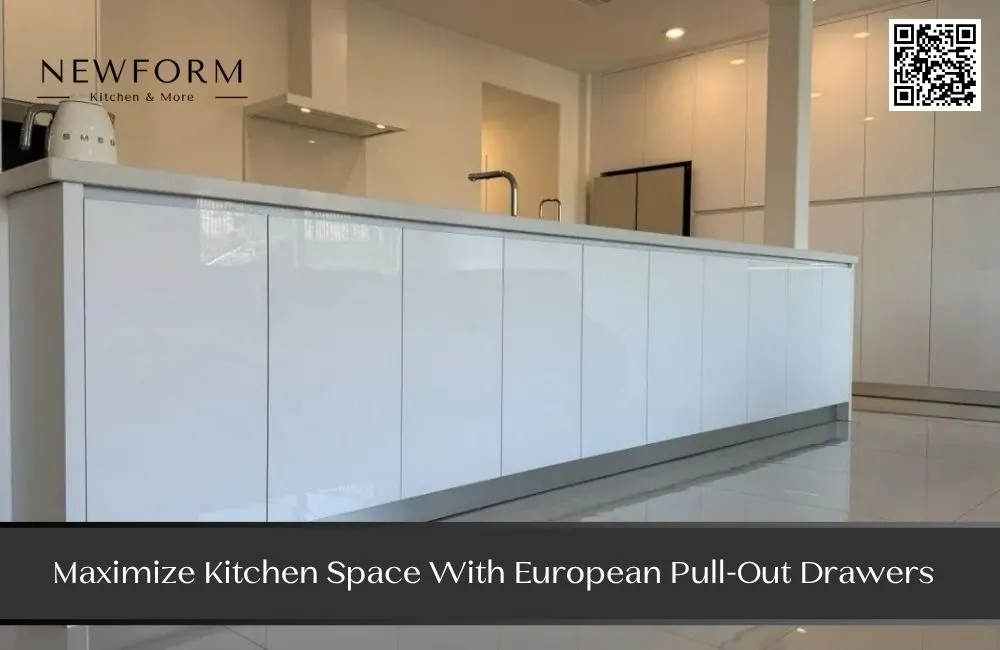
Maximize Kitchen Space With European Pull-Out Drawers
A kitchen can have plenty of cabinets and still feel short on usable storage. The problem is often not the amount of cabinetry but how easily homeowners can reach what is inside it. Deep base cabinets, narrow openings, crowded shelves, and poorly planned corners can leave valuable space unused. European pull-out drawers offer a different approach by bringing stored items toward the user instead of requiring someone to reach into the back of a cabinet. For Anaheim and Orange County homeowners planning a more functional kitchen, visiting a kitchen cabinet hardware showroom near me can also make it easier to compare drawer movement, interior fittings, and hardware quality before selecting a system.
Why Pull-Out Storage Can Make a Kitchen Feel Larger
Pull-out storage does not physically increase the square footage of a kitchen. Instead, it can make existing cabinet volume easier to use.
Traditional base cabinets often rely on doors with fixed or adjustable shelves behind them. Items placed near the front remain convenient, while cookware or food stored toward the back can become difficult to see and retrieve.
A full-extension drawer changes that experience.
When the drawer moves outward, much more of its contents become visible at once. This can reduce forgotten items and make it easier to assign specific storage zones throughout the kitchen.
What Makes European Pull-Out Drawers Different?
European kitchen design often emphasizes frameless cabinetry, wide drawers, concealed hardware, clean exterior lines, and efficient interior organization.
Rather than filling base cabinetry with numerous doors, a European-style kitchen may use broad drawer fronts with multiple storage levels.
The exterior can remain visually simple while the interior handles substantial everyday storage.
This relationship between clean appearance and practical organization is one reason pull-out systems have become popular beyond strictly European-style kitchens.
Frameless Cabinets Can Improve Interior Access
European cabinetry commonly uses frameless construction.
Unlike framed cabinetry, there is no traditional face frame attached across the front of the cabinet box. Doors and drawers connect directly to the cabinet structure.
This can provide a relatively open cabinet opening and works naturally with modern drawer systems.
A visit to a European frameless cabinet showroom can help homeowners understand the difference because construction details are much easier to recognize when opening an actual cabinet than when looking at a photograph.
Full-Extension Drawers Improve Visibility
Drawer extension is an important feature to examine.
A drawer that opens only partially can still leave items at the back difficult to access. Full-extension hardware allows the drawer to travel farther outward so homeowners can see and reach more of the interior.
This can be particularly useful for deep drawers containing cookware, dishes, food containers, or pantry goods.
Instead of rearranging items at the front to reach something behind them, the entire storage area becomes easier to inspect.
Deep Drawers Can Replace Traditional Base Cabinets
Pots and pans are commonly stored behind cabinet doors, often stacked on top of one another.
Wide, deep drawers offer an alternative.
Cookware can be organized in a way that allows homeowners to see multiple pieces from above. Frequently used pots can remain within comfortable reach, while dividers or organizers can help control lids and smaller accessories.
Deep drawers can also accommodate mixing bowls, serving dishes, small appliances, and food-storage containers depending on the drawer's dimensions and rated capacity.
Dish Storage Does Not Have to Be Overhead
Plates and bowls are traditionally stored in upper cabinets, but lower drawers can provide another option.
A deep drawer equipped with suitable organizers can hold dishes closer to waist height.
This may be useful for households that prefer not to repeatedly reach into upper cabinets.
The best location depends on the kitchen workflow. Dish storage positioned near the dishwasher can make unloading more efficient, regardless of whether the dishes are stored above or below the countertop.
Soft-Close Hardware Changes Everyday Use
Drawer hardware influences how cabinetry feels every day.
Soft-close systems are designed to slow the drawer near the end of its travel and bring it into the cabinet in a controlled manner.
This can reduce slamming and create a smoother user experience.
However, not every drawer system feels identical.
Homeowners should open and close displays with different loads when possible. A soft-close cabinet display Anaheim homeowners can test provides more useful information than simply seeing "soft-close" listed on a specification sheet.
Narrow Pull-Outs Can Use Difficult Spaces
Not every useful pull-out needs to be wide.
Narrow cabinet spaces can sometimes be designed for vertical storage.
Depending on the cabinet system, narrow pull-outs may accommodate bottles, spices, cooking oils, trays, utensils, or other frequently used items.
Their usefulness depends heavily on placement.
A narrow pull-out beside a cooking area may support food preparation, while the same cabinet placed across the room could be inconvenient.
Storage features should therefore be selected after the overall workflow is established.
Pantry Pull-Outs Improve Access to Deep Storage
Tall pantry cabinets can provide significant storage but may become difficult to organize if shelves are deep.
Pull-out pantry systems can bring stored items forward.
Some systems use individual interior drawers. Others move larger sections of shelving outward.
The right approach depends on cabinet dimensions, the type of groceries stored, and how frequently the pantry is used.
For households that buy in bulk, shelf strength and usable dimensions deserve particular attention.
Interior Drawers Keep the Exterior Minimal
Some European kitchens use internal drawers concealed behind a single cabinet front.
When the exterior door or large drawer front is opened, smaller storage levels appear inside.
This allows the kitchen to maintain broad, uninterrupted cabinet lines without giving up detailed organization.
The tradeoff is that accessing an interior drawer may require an additional movement.
Homeowners should decide whether preserving a highly streamlined exterior is worth that extra step for the items stored there.
Corner Storage Requires Careful Planning
Kitchen corners are notorious for producing awkward storage.
Pull-out corner mechanisms can make some of that space easier to reach, but not every system is appropriate for every layout.
The mechanism itself occupies room, and different products provide different levels of access.
A corner solution should be evaluated based on what will actually be stored there rather than selected simply because the hardware looks impressive.
Sometimes reorganizing the surrounding cabinetry produces a better result than installing a complicated corner mechanism.
Use Drawers Around the Cooking Zone
The cooking area is one of the best places to think carefully about pull-out storage.
Pots, pans, utensils, cooking oils, spices, and preparation tools are frequently needed within a short period.
Keeping these items in drawers near the range or primary preparation area can reduce unnecessary movement.
The exact arrangement should reflect how the homeowner cooks.
Someone who regularly prepares large meals may need deeper cookware drawers, while another household may benefit more from utensil organization and accessible pantry storage.
Design the Sink Cabinet Differently
The sink cabinet has unique challenges because plumbing, the sink basin, and possibly filtration or disposal equipment occupy interior space.
Standard drawers may not work directly beneath the sink.
However, specialized storage can sometimes use areas around plumbing more effectively.
The priority should remain access to the mechanical components.
Storage should never make routine inspection or future plumbing service unnecessarily difficult.
Pull-Out Trash and Recycling Can Clear the Floor
Waste containers are necessary but visually distracting when left exposed.
A pull-out waste cabinet can integrate trash and recycling into the cabinetry.
Placement is important.
Locating it near the main preparation area can make food cleanup more convenient, while positioning it near the sink may support dish cleanup.
In larger kitchens, homeowners should consider which task generates the most frequent waste rather than choosing the location based only on an available cabinet.
Drawer Width Should Match What It Stores
Wide drawers can create beautiful horizontal lines, but bigger is not automatically better.
A very wide drawer filled with heavy cookware can become substantially heavier than one holding utensils or linens.
Hardware ratings, drawer construction, and intended contents should therefore be considered together.
Multiple medium-width drawers may occasionally provide better organization than one oversized drawer.
A kitchen designer can help balance appearance, weight, and storage needs.
Hardware Quality Matters
A pull-out system depends heavily on components homeowners rarely see.
Slides, hinges, adjustment mechanisms, drawer boxes, mounting hardware, and connection points influence performance.
When comparing cabinetry, move the drawers repeatedly.
Pay attention to stability when fully extended and how smoothly they close.
Looking at a custom kitchen finishes showroom is useful for selecting colors and surfaces, but homeowners should spend equal time testing the mechanical parts behind those finishes.
Plan Storage Before Finalizing Cabinet Sizes
A common remodeling mistake is selecting cabinet dimensions first and deciding what goes inside later.
The process can work better in reverse.
Think about cookware, dishes, pantry goods, utensils, small appliances, baking supplies, food containers, and cleaning products before finalizing the cabinetry.
This helps determine which areas need deep drawers, shallow drawers, vertical storage, or conventional shelving.
A kitchen designed around real possessions is more likely to remain organized after move-in.
Coordinate Pull-Out Storage With Countertops
Countertops and cabinets are visually connected, but their technical relationship matters too.
Cabinet dimensions establish the support below the countertop, while islands and long cabinet runs can influence seams, overhangs, and countertop fabrication.
At a kitchen countertop and cabinet showroom Orange County homeowners can compare these components together instead of selecting each material independently.
This is particularly useful in contemporary kitchens where broad drawer fronts and large countertop surfaces create strong horizontal lines.
Material Samples Matter With Minimal Cabinetry
European cabinetry often uses relatively simple door shapes, which makes finish quality especially noticeable.
Without decorative profiles competing for attention, color, texture, sheen, edge treatment, and material consistency become major visual features.
Homeowners searching for kitchen cabinet material samples near me should view samples vertically when possible because cabinet fronts receive light differently from countertop samples placed flat on a table.
Viewing finishes beside flooring and countertop selections can also reveal undertones that may not be obvious individually.
Pull-Outs Can Support Accessible Kitchen Design
Storage that moves toward the user can reduce the need to reach deeply into lower cabinets.
This can make certain everyday items more comfortable to retrieve for a wide range of homeowners.
Frequently used objects can also be positioned between lower and middle storage levels rather than placing everything at floor level or high overhead.
Accessibility needs vary considerably, so cabinet design should respond to the people using the kitchen rather than relying on a generic storage formula.
Do Not Turn Every Cabinet Into a Pull-Out
Pull-out storage is useful, but a functional kitchen does not require a mechanism inside every cabinet.
Some items work perfectly well on fixed or adjustable shelves.
Other areas may benefit from simple drawers rather than specialized accessories.
Adding hardware without a clear purpose can increase complexity and cost without meaningfully improving the kitchen.
Each feature should solve a specific storage problem.
Consider Cleaning and Maintenance
Drawer interiors eventually collect crumbs, dust, and small spills.
Removable organizers can make cleaning easier.
Cabinet materials and drawer components should also be maintained according to manufacturer recommendations.
Avoid assuming that every mechanism can be cleaned with the same household product.
Keeping tracks and moving components free from excessive debris can also support smoother operation.
Use 3D Planning to Test Drawer Locations
A cabinet elevation can show drawer sizes, but three-dimensional planning can help homeowners understand the entire kitchen.
Consider what happens when the dishwasher is open while someone needs a nearby drawer. Check whether an island drawer conflicts with seating or another cabinet. Think about refrigerator doors and surrounding circulation.
These relationships become particularly important in smaller Anaheim kitchens where several functions share limited space.
Storage capacity is valuable only when drawers can be opened comfortably.
Frequently Asked Questions
What are European pull-out drawers?
European pull-out drawers generally refer to modern drawer systems commonly associated with frameless cabinetry, full-extension hardware, clean fronts, and organized interiors designed for efficient access.
Are pull-out drawers better than lower cabinet shelves?
They can be more convenient for many frequently used items because the contents move toward the user. Traditional shelves can still be appropriate for certain storage needs.
What can be stored in deep kitchen drawers?
Depending on their size and rated capacity, deep drawers may hold cookware, dishes, mixing bowls, food containers, pantry goods, or small appliances.
Are soft-close drawers worth considering?
Soft-close hardware can provide smoother, quieter closing. Homeowners should test actual hardware because construction and operating feel vary among cabinet systems.
Can pull-out storage work in a small kitchen?
Yes. Thoughtfully located drawers and pull-outs can improve access to existing cabinet volume, which can be especially useful when floor space is limited.
Better Access Can Be More Valuable Than More Cabinets
Maximizing kitchen cabinet material samples near me space does not always require adding cabinetry. Sometimes the greater opportunity is making existing cabinet volume easier to reach.
European pull-out drawers can improve visibility, organize deep storage, simplify access to cookware and pantry goods, and support the clean exterior lines associated with contemporary kitchen design. The most effective approach is not to add every available organizer, but to match each drawer or pull-out to a specific household routine.
For Anaheim and Orange County homeowners, careful planning before cabinet production can make a substantial difference. Test drawer hardware, compare cabinet construction, measure the items you intend to store, and think about how each drawer interacts with appliances, walkways, and preparation areas. When storage is designed around real daily habits, even a relatively compact kitchen can feel significantly more organized and usable.
Newform Kitchen & More's Anaheim showroom allows homeowners to explore cabinetry, drawer systems, finishes, materials, and kitchen design options in person while planning a kitchen suited to their space.
Newform Kitchen & More
Address: 1385 S State College Blvd, Anaheim, CA 92806, United States
Phone: +1 (714) 563-2050
