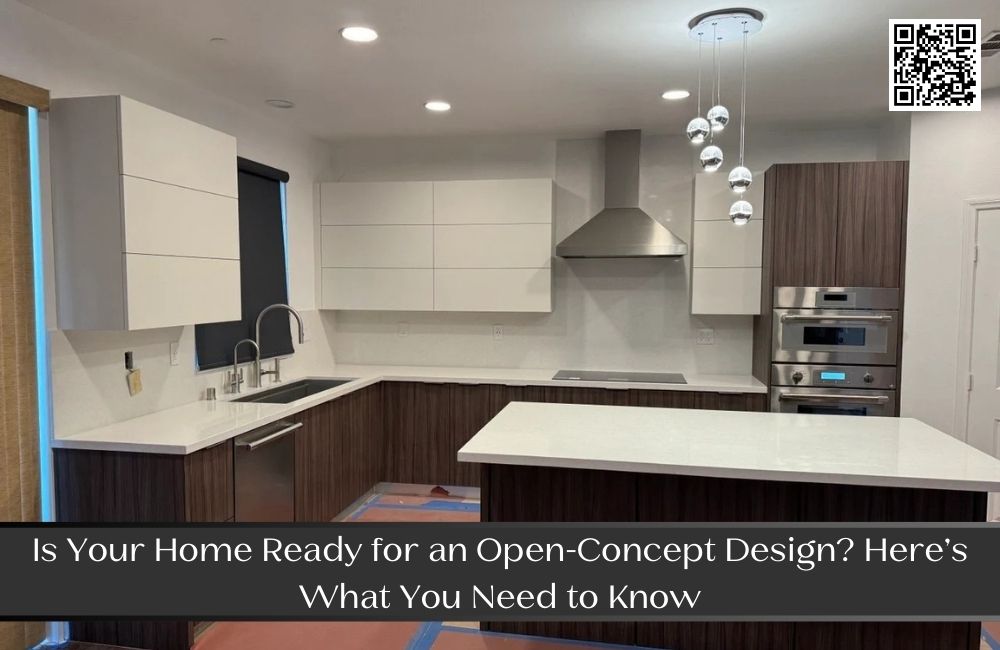
Is Your Home Ready for an Open-Concept Design? Here’s What You Need to Know
Open-concept designs have become one of the most popular trends in kitchen remodel near me. They create a sense of spaciousness, improve flow, and make it easier to interact with family and guests. But while the open-concept layout offers many benefits, it may not be the right choice for every home. Before tearing down walls and embarking on a major renovation, it’s important to assess whether an open-concept design is the best fit for your space.
If you’re considering an open-concept design for your home in Anaheim, CA, here’s everything you need to know to determine if your home is ready for this transformation.
1. Understanding Open-Concept Design
Open-concept design refers to the idea of removing walls or barriers between key living areas to create a more fluid, expansive space. Commonly, this involves combining the kitchen, dining, and living areas into one large room. The goal is to create an open, airy atmosphere that allows for better interaction and movement between spaces.
Benefits of Open-Concept Design
Improved Natural Light: With fewer walls blocking light, an open-concept layout allows natural light to flow more freely, brightening your home.
Enhanced Social Interaction: Whether you’re cooking, dining, or relaxing in the living room, an open layout fosters a sense of connection and makes it easier to interact with family and guests.
More Space: Removing walls can create the illusion of more space, making smaller homes feel larger and more inviting.
Increased Home Value: Many homebuyers today prefer open-concept layouts, making this a worthwhile investment if you're planning to sell in the future.
While these benefits are attractive, an open-concept renovation requires careful planning and design to ensure the layout works for your lifestyle.
2. Assessing Your Home’s Layout and Structure
Not all homes are suitable for an open-concept design. Before you start knocking down walls, it’s essential to evaluate your current home layout and structure.
Structural Considerations
Load-Bearing Walls: If you’re planning to remove a wall, you need to determine if it’s load-bearing. These walls support the weight of your home, and removing them could cause significant structural issues. Consult with a kitchen contractor or general contractor to assess whether the wall can be safely removed.
Ceiling Height: Open-concept spaces often require high ceilings to enhance the feeling of spaciousness. If your ceilings are low, the layout might feel cramped rather than airy.
Room Functionality: Think about how the new layout will affect each room’s function. For example, combining the kitchen and dining room into one large space can work well for families that enjoy cooking and eating together. However, if you prefer privacy while cooking, an open kitchen might not be ideal.
How a Kitchen Remodel Fits into an Open-Concept Design
When planning your kitchen remodel for an open-concept design, it’s essential to work with kitchen remodel contractors near me who understand how to create a layout that flows seamlessly from one space to another. A professional contractor can help you design a kitchen that works as both a cooking and entertaining space, while ensuring the aesthetic complements the rest of your home.
3. What You Need to Consider Before Making the Change
An open-concept home isn’t for everyone, and there are several factors to consider before embarking on this major renovation.
Noise and Privacy
In an open-concept space, sound carries more easily between rooms, which can be problematic in homes with multiple family members or if you entertain often. For example, noise from the kitchen might disrupt conversation in the living room or dining area. Consider soundproofing options such as adding rugs, curtains, or acoustical ceiling panels to minimize noise.
Additionally, privacy can become a concern, especially in bathrooms or bedrooms. If you love the idea of an open layout but want to maintain some level of privacy, think about how you can use furniture or subtle architectural elements like partial walls, partitions, or sliding doors to define spaces.
Heating and Cooling
With fewer walls to divide rooms, it can be harder to maintain consistent heating and cooling. An open-concept space may require upgrades to your HVAC system or additional heating and cooling solutions, such as ceiling fans or smart thermostats, to maintain comfort.
Storage Solutions
In an open-concept home, you may find that you need to get more creative with storage. Without the boundaries of separate rooms, it can be challenging to find space for everything. Custom cabinetry in the kitchen, hidden storage solutions, or multi-functional furniture can help maintain an organized, clutter-free environment.
4. How to Design Your Open-Concept Kitchen Remodel
Designing an open-concept kitchen requires special attention to detail, as the kitchen will often be the focal point of the space. Here are some tips for designing an open-concept kitchen that blends seamlessly with the rest of your home:
Consider the Layout: The kitchen should be designed to flow naturally into the living and dining areas. Consider an L-shaped or U-shaped kitchen layout with an island or breakfast bar for additional seating and workspace.
Use Materials and Colors to Create Cohesion: Choose materials and colors that complement the living and dining areas to create a harmonious flow. For example, if your living room features light wood furniture, consider using similar tones for your kitchen cabinets or countertops to tie the spaces together.
Lighting is Key: In an open-concept design, lighting plays a huge role in defining the atmosphere of the space. Use a mix of task lighting for cooking areas, ambient lighting for dining and lounging areas, and accent lighting to highlight key features. Pendant lights over the kitchen island or a statement chandelier above the dining table can serve as focal points.
Create Zones Within the Space: While the goal is to have an open, flowing layout, it's important to create functional zones within the space. Use furniture, rugs, or architectural elements like a kitchen island or half-wall to subtly define each area. This ensures that each room still serves its purpose while maintaining the openness of the layout.
5. Is an Open-Concept Kitchen Remodel Right for You?
Ultimately, the decision to pursue an open-concept kitchen remodel depends on your personal preferences, lifestyle, and the structure of your home. An open-concept layout can offer many benefits, including increased natural light, better social interaction, and a modern aesthetic. However, it’s important to weigh these advantages against potential drawbacks like noise, privacy issues, and the need for additional heating and cooling.
If you’re considering an open-concept design for your Anaheim home, it’s essential to work with a kitchen contractor who understands how to create a seamless, functional layout that enhances your space without sacrificing comfort or privacy. By carefully considering your needs and working with an experienced kitchen remodel contractor, you can determine if an open-concept design is the right choice for you.
Call to Action: Ready to transform your kitchen and living spaces with an open-concept design? Contact kitchen remodel contractors near me in Anaheim, CA, today to get expert advice and start planning your home renovation!
