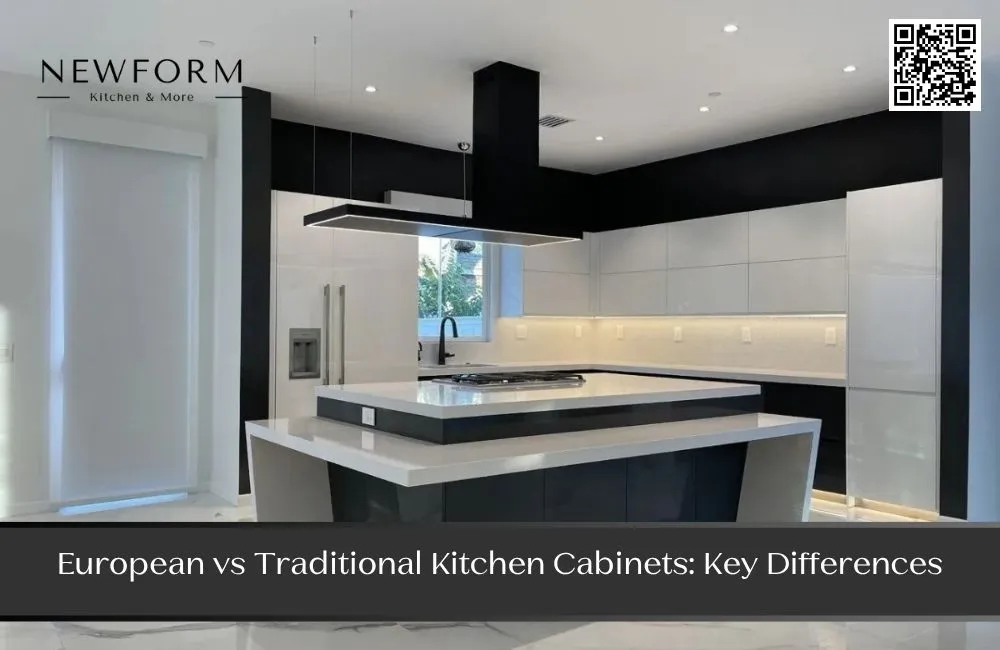
European vs Traditional Kitchen Cabinets: Key Differences
Choosing between European and traditional kitchen cabinets is about more than deciding which door style looks better. The two approaches can differ in cabinet construction, storage efficiency, hardware, proportions, detailing, and the overall feeling they create in a kitchen. For Southern California homeowners comparing options at a European kitchen showroom Southern California, understanding these differences can make it easier to choose cabinetry that fits both the architecture of the home and the way the kitchen will be used every day.
What Are European Kitchen Cabinets?
European kitchen cabinetry is commonly associated with streamlined design and efficient use of interior space. Many European-style systems use frameless cabinet construction, meaning there is no traditional face frame attached to the front of the cabinet box.
Doors and drawer fronts attach directly to the cabinet structure, creating a clean exterior and allowing relatively open access to the cabinet interior.
European cabinetry is also closely associated with contemporary design. Flat-panel doors, integrated handles, concealed hardware, large drawers, and simple geometric lines are common.
However, European does not have to mean stark or cold. Wood finishes, warm neutrals, textured surfaces, glass, stone, and subtle metal details can create a comfortable kitchen while maintaining a streamlined appearance.
What Are Traditional Kitchen Cabinets?
Traditional cabinetry generally emphasizes architectural detail and familiar furniture-inspired features.
Raised or recessed door panels, decorative moldings, visible framing, detailed hardware, and more pronounced trim can all appear in traditional kitchens.
Many traditional cabinets use framed construction. A face frame is attached to the front of the cabinet box, and doors are mounted to or positioned around that frame.
Traditional cabinetry can work particularly well in homes where homeowners want the kitchen to have a warmer, more decorative character.
The category is broad. Traditional kitchens can range from highly detailed designs to quieter transitional spaces that combine classic cabinet profiles with simpler finishes.
Frameless vs. Framed Construction
Construction is one of the most important distinctions between many European and traditional cabinet systems.
European Frameless Cabinets
With frameless construction, the cabinet box itself provides the structure for attaching doors and hardware.
Removing the front face frame can create wider access to the interior.
The appearance is typically precise and streamlined because doors and drawers can align closely across the cabinet run.
Traditional Framed Cabinets
Framed cabinets include a structural frame around the front of the box.
This creates a different opening configuration and can contribute to the familiar appearance of traditional American cabinetry.
Neither construction method should be judged only by its label. Material quality, engineering, hardware, installation, and manufacturing standards all influence how a cabinet performs.
Seeing both systems at a modern kitchen design center Orange County homeowners can visit can make the construction differences easier to understand than comparing photographs online.
Door Styles Create a Major Visual Difference
Cabinet doors occupy a large portion of the visible kitchen, so their design strongly affects the room.
European kitchens often use flat or slab-style doors.
The lack of elaborate profiles creates continuous surfaces and emphasizes proportion, color, and material.
Traditional kitchens commonly use more detailed doors, including recessed or raised center panels.
These profiles introduce shadows and architectural detail that can give the cabinetry more visual depth.
For homeowners who fall somewhere between the two styles, a simple recessed-panel door can provide a transitional option.
European Cabinets Often Emphasize Horizontal Lines
Many contemporary European kitchens use wide drawers and long cabinet runs to create strong horizontal lines.
This can make a kitchen appear visually organized and calm.
Instead of dividing base cabinetry into numerous narrow doors, the design may use broad drawer fronts with concealed hardware.
Tall cabinets can provide a contrasting vertical element for refrigerators, ovens, pantry storage, or other integrated features.
These proportions are easier to appreciate when viewing full-size contemporary cabinet displays Anaheim homeowners can examine rather than relying only on small material samples.
Traditional Kitchens Often Use More Architectural Layers
Traditional cabinetry can introduce visual hierarchy through crown molding, cabinet panels, decorative end treatments, trim, and detailed hardware.
Upper cabinets may terminate with molding near the ceiling.
Islands may incorporate furniture-inspired details.
The result can feel established and architectural rather than minimal.
This approach can complement homes where other rooms already contain detailed millwork, traditional doors, substantial baseboards, or classic furniture.
Storage Efficiency Depends on More Than Style
European cabinetry is frequently associated with efficient storage, but homeowners should examine the actual interior configuration rather than assuming one style automatically provides better organization.
Frameless construction can improve access to cabinet interiors.
Wide drawers can also make cookware, dishes, containers, and pantry items easier to see from above.
Traditional cabinets can be highly functional as well when equipped with thoughtfully designed drawers, organizers, adjustable shelves, and modern hardware.
Storage should ultimately be designed around household needs rather than cabinet appearance.
Drawers Are a Major Part of Modern European Design
One noticeable characteristic of many European kitchens is the extensive use of drawers in base cabinetry.
Deep drawers can store cookware, plates, mixing bowls, and food containers while allowing homeowners to view the contents without reaching into the back of a deep cabinet.
Internal organizers can divide smaller utensils and accessories.
Some systems also use interior drawers concealed behind a larger exterior front, preserving a minimalist appearance while creating multiple storage levels.
This is an important feature to test when visiting a minimalist kitchen cabinet showroom, because drawer movement and interior organization are difficult to judge from images alone.
Hardware Changes the Everyday Experience
Hinges and drawer systems may not be the first features homeowners notice, but they affect cabinetry every day.
Modern European cabinets frequently incorporate concealed hinges and soft-close drawer systems.
Traditional cabinetry can use the same modern hardware while maintaining a classic exterior.
When comparing cabinets, open and close the doors and drawers. Pay attention to stability, smoothness, extension, alignment, and how easily the interior can be reached.
A beautiful cabinet should also feel solid and predictable in daily use.
Handles and Integrated Pulls Create Different Looks
Traditional kitchens often use visible knobs or pulls as decorative elements.
Hardware may coordinate with lighting, faucets, or other metal finishes.
European kitchens may use simple linear pulls, edge pulls, recessed channels, or handle-free opening systems.
Removing prominent hardware allows cabinet surfaces to become the main visual feature.
The decision affects more than appearance. Homeowners should test how comfortable each opening method feels, especially on frequently used drawers and appliances.
Appliance Integration Is Common in European Kitchens
European-style kitchens often aim for a continuous cabinetry appearance.
Panel-ready refrigerators and dishwashers can be concealed behind cabinet fronts when compatible appliances and cabinetry are selected.
Wall ovens may be integrated into tall cabinet systems, while smaller appliances can be placed behind doors or within dedicated storage.
This approach reduces visual interruption and can make an open kitchen feel more connected to surrounding living spaces.
Traditional kitchens can also integrate appliances, but they may intentionally make certain cooking features more visually prominent.
Material Choices Extend Beyond Wood
Traditional cabinetry is frequently associated with painted or stained wood, but modern cabinet systems offer a broader range of surfaces.
European designs may incorporate matte finishes, textured laminates, wood veneers, high-gloss surfaces, glass, and other engineered materials.
Material choice affects durability, maintenance, texture, and how light interacts with the kitchen.
A high-end custom cabinetry showroom CA homeowners visit should provide an opportunity to examine actual finishes under realistic lighting rather than choosing solely from digital renderings.
European Design Can Work in Warm Homes
One misconception is that European cabinetry always creates an ultra-modern white or gray kitchen.
Contemporary European design can be warm.
Natural wood grain, beige, taupe, soft white, muted colors, stone surfaces, and textured materials can soften clean cabinet lines.
The simplicity comes primarily from controlled detailing and thoughtful proportions rather than from using one specific color.
This flexibility allows European cabinetry to work in many Southern California interiors.
Traditional Does Not Have to Mean Outdated
Traditional cabinetry can also be interpreted in a current way.
Reducing decorative trim, choosing simpler door profiles, and using restrained hardware can preserve traditional character without making the kitchen feel overly ornate.
This is often described as transitional design.
It can be a practical direction for homeowners who appreciate contemporary functionality but want the kitchen to relate to more traditional architecture elsewhere in the home.
Consider Cleaning and Maintenance
Cabinet detailing affects cleaning.
Flat European-style doors have fewer grooves and decorative profiles where dust and cooking residue can collect.
Detailed traditional doors may require more attention around edges and recessed areas.
Finish choice matters as well.
Very dark or highly reflective surfaces can show fingerprints differently from textured or lighter finishes.
Homeowners should examine samples and ask about manufacturer-recommended cleaning methods before making a final decision.
Think About the Architecture of the Home
Cabinet style should not be selected in isolation.
Consider ceiling height, windows, flooring, interior doors, nearby living areas, and the home's overall architectural character.
A highly minimalist kitchen can create an intentional contrast in an older home, but the transition should be planned carefully.
Likewise, a heavily detailed traditional kitchen may feel disconnected from a contemporary open-plan interior.
The goal is not necessarily to make every room identical. It is to make the design relationship feel deliberate.
Compare Full Kitchens Rather Than Individual Door Samples
A cabinet door sample provides useful information about color and finish, but it cannot show how an entire kitchen will feel.
Full displays reveal cabinet proportions, drawer widths, tall storage, appliance integration, corner conditions, countertop relationships, and lighting.
Visiting a luxury kitchen showroom Los Angeles area homeowners can access, or a showroom closer to Anaheim, can therefore provide useful context before finalizing a design direction.
Look at how the cabinetry works as a complete system rather than focusing only on one attractive finish.
Which Cabinet Style Works Better for Small Kitchens?
Both can work, but European cabinetry offers characteristics that can be especially useful in compact spaces.
Clean fronts can reduce visual clutter, while frameless construction may improve access to available cabinet space.
Large drawers can also organize everyday items efficiently.
Traditional cabinetry can still work beautifully in a smaller kitchen when decorative details are controlled and storage is planned carefully.
Room dimensions and layout remain more important than the style label.
Which Style Works Better for Open-Concept Homes?
Open kitchens are visible from multiple rooms, so cabinetry becomes part of the broader interior design.
European cabinetry can blend naturally into living spaces because of its furniture-like surfaces and minimal detailing.
Traditional cabinetry can create a stronger architectural focal point.
The right approach depends on whether homeowners want the kitchen to visually recede into the open floor plan or establish a more distinct identity.
Consider Customization Before Making the Final Choice
Homeowners are not always limited to choosing completely European or completely traditional.
Custom cabinetry can combine characteristics from both.
A kitchen might use frameless cabinet construction with a subtle recessed-panel door. Another may use minimalist slab cabinetry alongside a warm wood island. Modern drawer systems can be paired with more classic finishes.
This flexibility allows the design to respond to the house and household instead of forcing the project into a rigid category.
Frequently Asked Questions
Are European cabinets always frameless?
Frameless construction is strongly associated with European cabinetry, although homeowners should verify the construction method of the specific cabinet system they are considering.
Do frameless cabinets provide more storage?
They can provide more direct access to cabinet interiors because there is no front face frame. Actual usable storage still depends on cabinet dimensions, drawers, shelves, and interior organization.
Are traditional cabinets only suitable for older homes?
No. Traditional and transitional cabinetry can work in both older and newer homes when the proportions, materials, and detailing complement the architecture.
Can European cabinets use natural wood?
Yes. European kitchen design can incorporate wood veneers, wood-look materials, and other warm finishes while maintaining clean lines and contemporary proportions.
Should I see cabinets in person before choosing?
Whenever practical, yes. A showroom visit allows homeowners to examine construction, finishes, hardware, drawer operation, proportions, and storage features more accurately than photographs alone.
Choose Cabinetry Based on Style and Everyday Function
The biggest difference between European and traditional kitchen cabinets is not simply modern versus classic. European cabinetry commonly emphasizes frameless construction, clean surfaces, efficient drawers, integrated features, and restrained detailing. Traditional cabinetry tends to emphasize framed construction, architectural character, decorative profiles, and furniture-inspired elements.
Neither approach is automatically right for every Anaheim or Orange County home. Consider the architecture, kitchen size, storage requirements, cleaning preferences, appliances, and the way the household cooks before choosing.
Seeing full-size cabinetry in person can also make the decision easier. Contemporary cabinet displays Anaheim gives homeowners an opportunity to explore cabinetry, finishes, storage systems, and design possibilities while planning a kitchen suited to their space and lifestyle.
