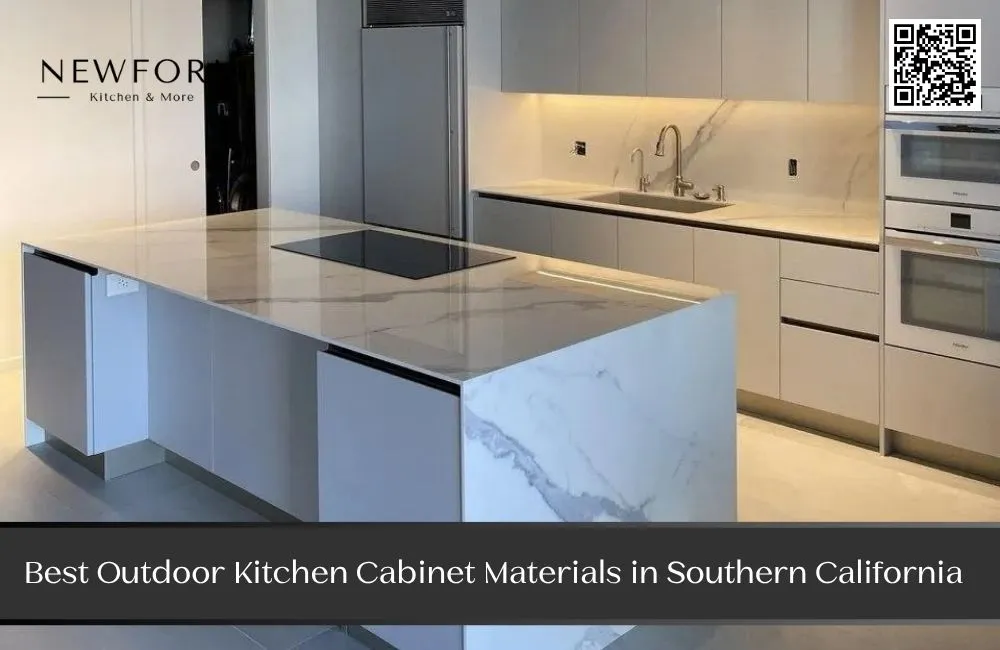
Best Outdoor Kitchen Cabinet Materials in Southern California
Outdoor kitchens in Southern California face conditions that indoor cabinetry never has to handle. Strong sunlight, temperature changes, coastal air in some communities, moisture, cooking grease, dust, and regular cleaning can all affect cabinet surfaces and hardware. That makes material selection one of the most important decisions in an outdoor kitchen project. Homeowners searching for a kitchen display showroom near me should look beyond color and door style and ask how each cabinet system is constructed, finished, ventilated, and intended to perform outdoors.
The best material depends on where the kitchen is located, how exposed it is, how frequently it will be used, and how much maintenance the homeowner is comfortable with. Stainless steel, powder-coated metal, marine-grade polymer, masonry-based systems, and certain exterior-rated composite products can all have a place in Southern California outdoor kitchens when specified correctly.
Why Outdoor Cabinets Need Different Materials
Indoor kitchen cabinets operate in a relatively controlled environment. Outdoor cabinetry does not.
Even beneath a patio cover, cabinets may encounter blowing rain, morning moisture, heat, dust, insects, and ultraviolet exposure. A kitchen closer to the Southern California coast may also experience salty air that deserves additional consideration when selecting metals and hardware.
Because of these conditions, standard interior cabinetry should not automatically be assumed suitable for an outdoor installation.
Exterior-rated products should be selected according to their manufacturer's intended use and the conditions of the specific property.
Stainless Steel Is a Popular Outdoor Option
Stainless steel is closely associated with professional cooking equipment and remains a practical choice for outdoor cabinetry.
Its nonporous surface is relatively easy to clean, and quality stainless cabinetry can coordinate naturally with grills, refrigerators, sinks, and other outdoor appliances.
The grade and construction matter, however.
Not every product described as stainless steel offers identical corrosion resistance. For outdoor environments, particularly properties influenced by coastal conditions, homeowners should verify the stainless grade and manufacturer recommendations.
Quality hinges, fasteners, drawer slides, and handles are equally important because cabinetry is only as durable as its supporting components.
At a kitchen and bath design center Anaheim homeowners can visit, examining cabinet doors, seams, drawer systems, and hardware in person can reveal differences that are difficult to see online.
Consider the Appearance of Stainless Steel
Some homeowners like the professional appearance of stainless steel, while others feel that using it across an entire outdoor kitchen creates a more commercial look than they want.
This can be addressed through design.
Stainless cabinets can be combined with stone countertops, textured walls, warm flooring, wood-look elements, or other exterior finishes to soften the overall composition.
The objective is to make the cooking area feel connected to the home and landscape rather than placing a collection of appliances on the patio.
Powder-Coated Metal Adds Design Flexibility
Powder-coated metal cabinetry can provide another outdoor solution.
Instead of exposing the underlying metal, a powder-coated finish creates a finished surface available in a range of colors and textures.
This makes it possible to achieve a softer or more architectural appearance than traditional stainless steel.
Neutral colors can help the cabinetry blend with stucco, stone, concrete, and contemporary patio finishes. Darker finishes can create contrast against light countertops.
The quality of the coating and the manufacturer's exterior specifications remain important. Scratches or damage should be addressed according to the product's care requirements.
Seeing full cabinet runs at walk-in kitchen showrooms Orange County homeowners can access can help clarify how a finish looks across a large installation rather than on a small sample.
Marine-Grade Polymer Can Handle Demanding Conditions
Marine-grade polymer is another material homeowners may encounter when researching outdoor cabinetry.
It is valued for its resistance to moisture and does not depend on a traditional wood structure that can swell when exposed to water.
That can make it especially interesting for kitchens located near pools or in areas where moisture exposure is a recurring concern.
The visual character is different from natural wood, so homeowners should examine full-size samples rather than making a decision from an online photograph.
Quality also varies among cabinet systems. Door construction, hinges, fasteners, UV performance, and manufacturer specifications should all be evaluated.
Exterior-Rated Composite Cabinetry Can Offer More Styles
Some outdoor cabinet systems use composite or engineered materials designed specifically for exterior environments.
These products can provide a wider variety of colors and textures, including finishes intended to suggest the warmth of wood without relying on conventional indoor wood cabinetry.
This can be particularly useful when the outdoor kitchen connects directly to a contemporary interior and homeowners want the two spaces to share a similar design language.
When comparing options at kitchen cabinet galleries Southern California, ask whether the displayed material is specifically rated for exterior use. A material that looks similar to an outdoor product may have very different performance requirements if it was manufactured for interior cabinetry.
What About Real Wood Outdoor Cabinets?
Natural wood can create a warm appearance that works beautifully with Southern California architecture.
It also requires more careful consideration outdoors.
Wood responds to moisture, heat, sunlight, and changing environmental conditions. Some species and construction methods are more appropriate for exterior applications than others, but maintenance is usually an important part of the decision.
Protective finishes may need periodic attention, and changes in color can occur with sun exposure.
Homeowners who genuinely appreciate natural aging and are comfortable with maintenance may still find exterior-appropriate wood appealing.
Those who want a lower-maintenance kitchen should compare other materials before deciding.
Standard Indoor Wood Cabinets Are Usually a Different Category
It is important to distinguish purpose-built exterior wood cabinetry from standard interior cabinet boxes.
A beautiful indoor cabinet is not automatically suitable for a covered patio simply because it does not receive direct rain.
Humidity, wind-driven moisture, heat, and temperature variation can still reach cabinetry under a roof.
When visiting a kitchen remodeling showroom near me, homeowners planning an exterior project should make it clear that the cabinets will be outdoors so products can be evaluated according to the correct application.
Masonry-Based Outdoor Kitchens Offer Another Approach
Not every outdoor kitchen needs to use freestanding cabinet boxes.
Some designs use masonry, concrete block, or similar structural construction as the base, with access doors and storage components integrated into the assembly.
This approach can create a substantial built-in appearance and coordinate naturally with stone, stucco, tile, or other architectural finishes.
However, storage flexibility can differ from a cabinet-based system.
Detailed planning is needed for appliance openings, access panels, ventilation, drawers, utilities, and service requirements.
The choice between masonry construction and modular cabinetry should therefore be made early in the design process.
Countertops Must Work With the Cabinet Material
Cabinet durability is only part of the outdoor kitchen.
The countertop also needs to tolerate the installation environment.
Material performance can vary based on sunlight, heat, staining, sealing requirements, and manufacturer recommendations.
Countertop weight is another consideration.
Cabinet systems need appropriate support for the selected surface, particularly around large spans and appliance openings.
Instead of selecting cabinets and countertops independently, they should be planned as one assembly.
Sun Exposure Should Influence Material Selection
Southern California sunshine is one of the reasons outdoor living is so appealing, but constant ultraviolet exposure can be demanding on finishes.
A cabinet wall that receives intense afternoon sun may experience different conditions from cabinetry installed beneath a deep covered patio.
Before choosing a material, observe the proposed kitchen location at different times of day.
Shade structures, patio covers, walls, and landscaping can change exposure substantially.
Manufacturers may provide information about UV resistance, finish performance, and exterior use. Those specifications are more useful than assuming that every outdoor-rated finish will age identically.
Coastal Conditions Deserve Extra Attention
Homes closer to the ocean may experience salt-laden air that can affect exposed metals.
This does not mean metal cabinetry should automatically be avoided.
Instead, the specific material grade, hardware, coating, cleaning requirements, and manufacturer recommendations become more important.
Regular cleaning may also help remove deposits from cabinet surfaces and hardware.
Homeowners should discuss the actual installation location with their cabinet supplier rather than simply requesting "outdoor cabinets."
Hardware Matters as Much as Cabinet Panels
A cabinet door may tolerate exterior conditions well while inexpensive hinges or drawer slides become the weak point.
Hardware should be evaluated as part of the complete system.
Consider hinges, drawer slides, handles, fasteners, adjustment mechanisms, and any internal accessories.
Open drawers and doors when visiting local kitchen cabinet distributors Anaheim homeowners are considering. Smooth movement and solid construction provide useful information about the system that a finish sample cannot show.
Ventilation Is Critical Around Outdoor Appliances
Outdoor cabinetry frequently surrounds grills, refrigerators, burners, and other equipment.
These appliances may have specific ventilation and clearance requirements.
Cabinet openings should be designed according to the appliance manufacturer's specifications rather than simply fitting tightly around the equipment.
Gas appliances deserve particular attention because ventilation and combustible-material clearances can be safety considerations.
Appliance models should therefore be selected early enough for their specifications to influence the cabinetry design.
Storage Should Reflect Outdoor Use
An outdoor kitchen does not necessarily need to duplicate an indoor kitchen.
Think about what will realistically remain outside.
Serving pieces, grilling tools, cleaning supplies, and certain durable accessories may be practical to store near the cooking area. Other items may be better kept indoors depending on moisture, temperature, pests, and cabinet design.
This distinction can prevent homeowners from spending money on excessive storage that will rarely be used.
Plan for Cleaning Before Choosing a Finish
Outdoor cabinetry will encounter more dust and environmental residue than indoor cabinets.
Cooking adds grease, smoke, spills, and fingerprints.
A highly textured finish may hide marks well but require a different cleaning approach. Smooth stainless surfaces may be easy to wipe but can show fingerprints or water marks depending on the finish.
Ask how the material should be cleaned and whether specific products should be avoided.
A finish is only low maintenance if its care requirements fit the homeowner's routine.
Match Cabinetry to the Home's Architecture
Outdoor kitchens often sit directly beside the house, making visual coordination important.
A modern Anaheim home may suit streamlined powder-coated or stainless cabinetry. A warmer Mediterranean-inspired property might benefit from cabinetry integrated with masonry, stone, or textured architectural finishes.
The outdoor kitchen does not have to copy the indoor kitchen exactly.
It should, however, feel related to the property.
A kitchen design studio Orange County homeowners consult can evaluate cabinet materials alongside flooring, countertops, patio finishes, lighting, and nearby architecture instead of treating cabinetry as an isolated product.
Covered Outdoor Kitchens Still Need Exterior Materials
A roof or patio cover provides valuable protection, but it does not turn an exterior kitchen into an indoor room.
Wind can carry moisture and dust beneath a cover. Temperature and humidity still fluctuate. Sunlight may reach the cabinets during part of the day.
For that reason, exterior-rated materials remain important even when the kitchen is partially protected.
The degree of protection should influence the final specification, but it should not be used as a reason to install materials unsuitable for outdoor conditions.
Compare Materials Based on the Actual Property
There is no single outdoor cabinet material that is automatically best for every Southern California home.
Stainless steel can provide durability and a professional aesthetic. Powder-coated metal offers greater color flexibility. Marine-grade polymer can perform well where moisture resistance is a priority. Exterior-rated composites can provide contemporary design options, while properly selected exterior wood can create natural warmth for homeowners willing to maintain it. Masonry-based systems offer another durable architectural approach.
The right decision comes from matching the material to exposure, location, maintenance expectations, appliances, and desired appearance.
Frequently Asked Questions
What is the best cabinet material for an outdoor kitchen?
There is no universal best material. Stainless steel, powder-coated metal, marine-grade polymer, exterior-rated composites, appropriate exterior wood systems, and masonry construction can all be considered depending on the environment and design.
Can regular kitchen cabinets be used outside under a patio cover?
Standard indoor cabinetry should not automatically be used outdoors. Even covered kitchens can experience humidity, heat, dust, UV exposure, and wind-driven moisture. Verify that the cabinet system is intended for exterior use.
Is stainless steel good for Southern California outdoor kitchens?
It can be an excellent option, but stainless grade, construction quality, hardware, maintenance, and proximity to coastal conditions should all be considered.
Can outdoor kitchen cabinets look like wood?
Yes. Some exterior-rated composite and other cabinet systems offer wood-inspired finishes. Exterior-suitable natural wood may also be available, although maintenance requirements should be carefully reviewed.
Do outdoor kitchen cabinets need ventilation?
Cabinetry surrounding certain outdoor appliances may require ventilation, clearances, or specific installation conditions. Always follow the requirements provided by the appliance and cabinet manufacturers.
Choose Materials for the Environment, Not Just the Showroom
The kitchen and bath design center Anaheim should look attractive, but appearance is only the beginning. Southern California homeowners also need to consider sunlight, moisture, coastal exposure where applicable, cleaning, hardware, appliance heat, ventilation, and long-term maintenance.
Before making a final selection, compare full-size materials, open cabinet doors and drawers, review exterior-use specifications, and consider exactly where the kitchen will sit on the property. A thoughtful material choice can create an outdoor cooking space that feels connected to the home while being better prepared for the conditions it will encounter every day.
For homeowners who want to compare cabinetry, finishes, storage ideas, and outdoor kitchen design possibilities in person, Newform Kitchen & More provides design assistance from its Anaheim location.
